Are skid steer attachments universal? Compatibility guide
Quick answer
Many modern full-size skid steers use a common quick-attach style, but skid steer attachments are not universally compatible. A plate that locks on proves only the mechanical interface; flow, pressure, couplers, case drain, controls, attachment weight, machine capacity, visibility, guarding, and manufacturer approval must also match.
Common questions
- Do Bobcat attachments fit other skid steers?
- Sometimes. A Bobcat attachment and another brand's loader may share a compatible mounting interface, but the exact carrier and attachment documentation must also agree on hydraulics, controls, weight, capacity, guarding, and approved use.
- Does a universal quick-attach plate make an attachment universal?
- No. The plate addresses only the mechanical connection. It does not establish hydraulic, electrical, capacity, visibility, or manufacturer-approved compatibility.
- Can I use an adapter plate to make an attachment fit?
- Only when the adapter, carrier, and attachment manufacturers approve the complete combination. An adapter adds weight and moves the load forward, so the resulting capacity, geometry, locking method, and visibility must be evaluated.
- Can a high-flow skid steer run any hydraulic attachment?
- No. The machine's delivered flow and pressure must remain inside the attachment's specified range, and the return circuit, case drain, couplers, controls, cooling, guarding, and carrier approval must also match.
Source note: Reviewed against current Caterpillar work-tool specifications and guidance, Bobcat hydraulic guidance and attachment literature, and a John Deere skid-steer operator manual. The manuals and compatibility information for the exact carrier, attachment, coupler, options, and serial numbers control.
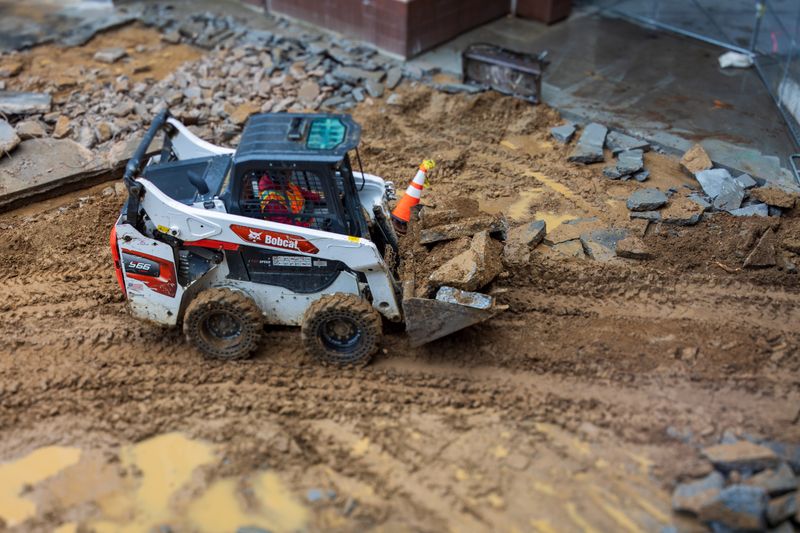
A skid steer attachment can fit the mounting plate and still be unusable or unsafe. Many modern full-size loaders share a common quick-attach style, so cross-brand fit is often possible. But the honest answer to “are skid steer attachments universal?” is no—not without checking the complete carrier-to-attachment combination.
Physical plate fit proves only that two pieces may connect. It does not prove that the loader can power, control, carry, or safely operate the attachment. Use the decision flow and skid steer attachment compatibility chart below before buying, renting, or borrowing a work tool.
If you are still deciding which tool suits the job, start with our skid steer attachments guide. This page owns the next question: whether one specific attachment is compatible with one specific machine.
Why “universal” quick attach is only a starting point
“Universal,” SSQA, and “skid steer quick attach” are commonly used marketplace labels for a widespread mounting style. They should not replace model-specific documentation. Mini loaders, older machines, compact tractors, telehandlers, proprietary couplers, and specialty carriers can use different interfaces even when a listing looks similar.
Do not rely on a seller’s brand list, a tape-measure comparison, or a trial fit alone. Record the carrier model and serial number, coupler model, installed options, and attachment model and serial number. Then compare the current manuals or written compatibility information for that exact combination.
Official product data shows why the plate is only one line of the decision. Caterpillar’s A41 auger specifications, for example, separately list mounting-bracket design, required hydraulics, optimal flow, optimal pressure, and attachment weight. Bobcat attachment literature similarly identifies approved machine classes, hydraulic requirements, operating weight, and required control kits for individual configurations.
10-step skid steer attachment compatibility decision flow
Treat every step as a gate. A “no,” an unknown value, or conflicting documents means stop and resolve it with the manufacturer or an authorized dealer before connecting the attachment.
1. Confirm the mounting interface
Identify the loader coupler and the attachment frame by manufacturer and model. Check the required latch, pin, wedge, or power-coupler procedure and inspect both sides for wear, cracks, deformation, debris, and interference. A label such as “universal” is not a substitute for a confirmed interface.
2. Match hydraulic flow
For a powered attachment, compare the carrier’s delivered auxiliary flow with the attachment’s permitted minimum and maximum. Do not classify compatibility by the words standard flow or high flow alone; package names and outputs vary. Use the worksheet in our high flow vs. standard flow skid steer guide for the full hydraulic decision.
3. Match pressure and return limits
Confirm operating pressure, relief pressure, and any allowable return back pressure in the attachment manual. A loader capable of higher pressure can still exceed an attachment’s limit, while low pressure can leave a motor unable to perform as intended. Never treat the carrier relief setting as an approved continuous attachment pressure.
4. Verify hydraulic coupler size, type, and function
Record each pressure, return, drain, and auxiliary connection. The physical coupler size and type, hose routing, port role, and cleanliness procedure must agree. Do not improvise reducers or swap connectors until the attachment and carrier manufacturers confirm the resulting flow restriction, pressure rating, hose routing, and connection sequence.
5. Check the case-drain requirement
Some hydraulic motors require a dedicated low-pressure case-drain line; others do not. If the attachment requires one, verify that the machine has the correct drain connection and that its allowable case pressure meets the attachment specification. Connecting a drain hose to the wrong return path can damage a motor seal.
6. Confirm electrical controls and extra functions
Check the connector, voltage, pinout, controller, software, and number of hydraulic functions. A grapple may need one auxiliary circuit, while a planer, grader, or snow tool may need additional functions or a model-specific control kit. A mechanical and hydraulic match can still fail here.
7. Record attachment weight and load position
Use the published operating weight for the attachment’s exact width, options, cutting tools, hoses, coupler, and adapter. Include retained material or payload separately. An adapter can add mass and move the load center forward, changing leverage even when the bare attachment looks light.
8. Check machine capacity in the real configuration
Compare the complete working load with the carrier’s rated operating capacity and manufacturer restrictions for the installed tires or tracks, counterweights, coupler, and work tool. Tipping load is not a working target. Our tipping load vs. rated operating capacity guide explains the capacity terms and includes a load-planning worksheet.
9. Check visibility, width, guarding, and work envelope
From the operator position, the attachment must preserve the visibility required by the carrier and work-tool instructions. Confirm overall width, hose clearance, cab-door clearance, tire or track clearance, lift-arm clearance, transport position, and required guarding. Ground conditions also matter; compare the stability and surface tradeoffs in our skid steer vs. compact track loader guide.
10. Verify manufacturer restrictions and locking procedure
Read both manuals for prohibited carriers, required protection packages, approved materials, duty-cycle limits, bystander zones, and attachment-change instructions. Follow the exact lock-verification method rather than inventing a field test. A John Deere skid-steer operator manual, for example, instructs the operator to visually verify that the quick-attach pins are fully engaged before operation; use the procedure for your own machine and coupler.
Skid steer attachment compatibility chart
Copy this worksheet into the equipment file or purchase record. Fill the carrier and attachment columns from manuals, data plates, or written manufacturer information—not memory or a marketplace listing.
| Compatibility check | Carrier or coupler document | Attachment or adapter document | Go/no-go evidence |
|---|---|---|---|
| Make, model, serial number, installed options | ______ | ______ | ______ |
| Mounting interface and lock method | ______ | ______ | ______ |
| Auxiliary flow range | ______ | ______ | ______ |
| Pressure and return limits | ______ | ______ | ______ |
| Coupler size, type, port role, and hose route | ______ | ______ | ______ |
| Case drain and maximum case pressure | ______ | ______ | ______ |
| Electrical connector, controls, and extra functions | ______ | ______ | ______ |
| Attachment, adapter, and working-load weight | ______ | ______ | ______ |
| ROC, configuration limits, and load position | ______ | ______ | ______ |
| Width, clearance, visibility, and guarding | ______ | ______ | ______ |
| Approved carrier and manufacturer restrictions | ______ | ______ | ______ |
| Manual revision and confirming contact | ______ | ______ | ______ |
Keep a PDF, photo, email, or dealer fitment record with the completed chart. Bobcat’s current compact-loader hydraulic guide illustrates how flow packages can differ by loader model, while the exact attachment specification and manual define the acceptable combination.
When cross-brand attachment use is most likely to work
A passive bucket or pallet-fork frame on a documented common coupler is a simpler match than a powered planer, mulcher, snow blower, or grade-control attachment. Simpler does not mean automatic: width, weight, load center, visibility, lock engagement, and carrier approval still matter.
Risk and documentation needs increase when the combination includes:
- A mini loader, older carrier, tractor loader, telehandler, or adapter plate
- High-flow, enhanced-flow, or high-pressure hydraulics
- A case drain, motor return requirement, or low back-pressure limit
- Multiple hydraulic functions or proprietary electrical controls
- Forestry, demolition, cutting, lifting, or other guarded applications
- A used attachment with an unreadable data plate or missing manual
The bottom line
Skid steer attachments are often mechanically interchangeable, but they are not universally compatible. Confirm the mount, hydraulics, connections, controls, weight, capacity, visibility, guarding, and written manufacturer restrictions as one system.
Before money changes hands, complete the worksheet with the exact model and manual data. If one field remains unknown, pause the purchase and get written fitment confirmation from the carrier, coupler, adapter, or attachment manufacturer.

Ironworks Insider Editorial Team
Independent trade-focused editorial team